 Anti-fraud technology has become an integral component in insurers' fraud-fighting arsenal. In fact, when coupled with collaboration amongst SIU, claims, law enforcement, and other entities, such technology may represent the most powerful weapon in combatting organized criminal empires in particular.
Yet, even though insurance carriers are eager to both adopt and utilize anti-fraud technology in increasingly creative and sophisticated ways, they face major challenges impeding successful deployment. To delve deeper into these obstacles and the current relationships between carrier and technology, the Coalition Against Insurance Fraud, with the help of SAS, conducted a study of 74 insurers.
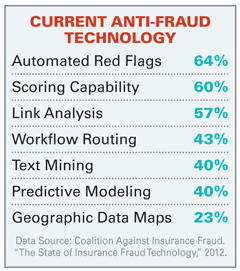
Overall, the results of the inaugural study have been encouraging, including the fact that close to 90 percent of the insurers surveyed are at least using basic analytic tools such as automated red flags, claims scoring, and link analysis. This, however, means that 10 percent of study participants are not incorporating technology in their fraud programs.
When relaying the underlying metrics and key survey findings at the 27th annual IASIU conference, which took place last month in Palm Desert, Calif., Dennis Jay, executive director at The Coalition, said that while insurers still have a long way to go, their progress should not be diminished and does bode well for future progress.
"Anti-fraud technology is maturing rapidly, and many insurers have come a long way in the last few years. Although the study suggests that less than half of 74 insurers are employing predictive modeling, text mining, geographic data mapping and other advanced analytics*, we must keep in mind that we are in an era of tremendous pressure on funding. The fact that the majority of survey participants say they plan to either increase investment in these technologies in 2013 or at least maintain current levels is positive news."
Even so, only about 14 percent of participating insurers report using any automated tools to detect underwriting or point-of-sale fraud. More than half of the insurers have been using anti-fraud technology for more than five years, and about one in five is relatively new to the tech arena, having deployed such analytics in just the last two years.
Common Obstacles
When asked to speak to deployment challenges, participating insurers cited a lack of IT resources and difficulty in calculating cost-benefit analysis as obstacles. The majority of respondents nevertheless expressed satisfaction with their systems, while many plan to upgrade in the near future. Nearly a third expect technology budgets to increase next year. Top new technologies on their shopping lists include predictive modeling and text mining capabilities.
Insurers said their analytical systems are giving them better quality referrals of suspect claims, and in many cases, are helping to detect organized fraud much more quickly than traditional investigative techniques. Their systems are also detecting potential fraud that otherwise likely would go undetected, according to survey results. Jay also noted fewer 'false positives.' Areas where technology is having the greatest impact include medical provider fraud, personal auto comprehensive/collision coverage and no-fault claims, say respondents.
In underscoring the need to bring more sophisticated forms of anti-fraud technology to the forefront, Jay stresses the vital role claims professionals' expertise will continue to play in softening the blow of insurance fraud on the industry and the public.
"Moving forward, we will still need the intuition and experience of claims handlers," he says. "There is an additional need for more (street) investigators overall, as well."
The Coalition will be using these findings as baseline data from which to craft and compare future surveys. Ideally, the organization hopes to carry out such a survey every 2 years, with the support of a newly created research committee.
© Arc, All Rights Reserved. Request academic re-use from www.copyright.com. All other uses, submit a request to TMSalesOperations@arc-network.com. For more information visit Asset & Logo Licensing.