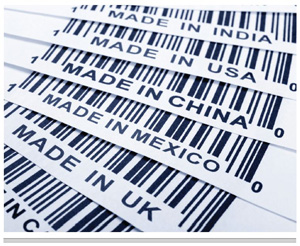
 One of the realities of operating in a global economy is the rising number of today's products liability claims relating to defective products that were manufactured overseas. The U.S. Consumer Product Safety Commission (CPSC) reported in 2007 that the value of 2006 United States imports from all countries under its jurisdiction totaled $614 billion. Of this amount, approximately 40 percent of all consumer products imported into the United States were from China. According to the CPSC report, approximately two-thirds of all product recalls are of imported products, and the vast majority of these recalls involve Chinese products.
 By understanding the unique legal and practical issues that can potentially arise, carriers can be better prepared to pursue claims against a foreign manufacturer and defend claims seeking to join a foreign manufacturer as an additional defendant in the suit. It is imperative that carriers also analyze the practical considerations involved in pursuing claims against foreign manufacturers, including the additional time and expense involved.
Personal Jurisdiction
Foreign manufacturers selling products in the United States generally face the same product liability rules that domestic manufacturers face; however, plaintiffs or co-defendants attempting to seek legal redress against a foreign manufacturer face additional practical and legal problems when seeking compensation, contribution, or indemnification for damages from a foreign entity. A threshold question in any case involving a product manufactured by a foreign manufacturer is whether a U.S. court can exercise personal jurisdiction over the foreign entity. In cases involving foreign entities, this threshold issue is frequently the subject of extensive litigation before the parties even begin to address liability issues.
As a general rule, if a foreign manufacturer has knowledge that its product or part of a shipment of products were being sold or distributed to the particular state, or if there is evidence of ongoing regular contact between the foreign manufacturer and a particular state, then courts will find that a foreign entity is subject to personal jurisdiction of the U.S. court, as was found in Helicopteros Nacionales de Colom. S.A. v. Hall, 466 U.S. 408 (1984). In order to determine the strength and sufficiency of a foreign manufacturer's contacts with a particular state, courts will examine the contacts between the foreign manufacturer and a particular state to determine whether sufficient "minimum contacts" exist to justify hailing a foreign manufacturer into a particular state to defend its product, decided in the case of Asahi Metal Industry v. Superior Court of CA, 480 U.S. 102 (1987).
If a foreign manufacturer files a motion to dismiss the complaint based upon lack of personal jurisdiction, then counsel should send written discovery to the foreign manufacturer to ascertain the defendant's minimum contacts with the particular state. Additionally, interrogatories, document requests, and subpoenas should be sent to all parties and non-parties who are known to regularly conduct business with the foreign entity to identify as many contacts as possible between the foreign entity and the forum state. In general, a "contact" for this purpose is any communication, advertisement, sale or shipment that is specifically directed to a person or entity in the particular state. Also, depositions should be taken of the foreign company's employees and/or other party and non-party witnesses in order to analyze the strength of the contacts with the particular state. These jurisdictional challenges drag out the litigation process and substantially increase the cost of suit, especially when the jurisdictional discovery requires foreign travel. Occasionally a foreign defendant will opt to waive the lack of personal jurisdiction defense in order to save the costs associated with protracted litigation, or to maintain its relationship with a non-party located within the forum state.
Practical Considerations
The decision to sue or join a foreign manufacturer often boils down to practical considerations. If you are litigating a case in a jurisdiction which enables the plaintiff or co-defendant to maintain a cognizable claim and seek full liability for a product defect from a local distributor, then it may not be necessary for the plaintiff to sue or join the foreign manufacturer. If the foreign manufacturer has a design and/or manufacturing presence in the U.S., then the parties may be able to proceed solely against the U.S. entity. Conversely, if the litigation is in a jurisdiction where the party seeking damages based upon a product defect must establish the independent liability of a distributor, then the party may have no choice but to include the foreign manufacturer as a defendant.
Another consideration that comes into play, in the decision of whether to sue or join a foreign manufacturer, is that recent public surveys conducted in the U.S. demonstrate a general bias among jurors against foreign products. For this reason, many domestic companies prefer to join in a potentially liable foreign manufacturer to allow the party defendant to point the finger at a party who may generally be viewed less favorably. However, in a jurisdiction where jurors are permitted to allocate liability to non-parties, co-defendants will prefer not to join the foreign defendant, but still point the finger at the foreign entity that is not represented in the case and the pressure will be shifted to the plaintiff to join this party in order to hold them financially accountable for any liability that may be allocated to them.
Before suit is filed, it is important to analyze whether a judgment can be enforced against the foreign manufacturer. If you obtain a judgment in the U.S. and there is no insurance available to cover the loss, then you may need to enforce the judgment overseas, where the defendant is located and has most of its assets. Many foreign manufacturers are uninsured; often a party finds out in litigation that the foreign manufacturer's insurance does not cover goods that come into the U.S.
Currently, the U.S. is not a member of any bilateral or multilateral agreements regarding the enforcement of judgments. Whether a U.S. judgment can be enforced overseas is determined by the domestic law of the "recognizing" country, and there is no uniformity of practice amongst nations. Some conventions, such as the Hague Convention, provide a mechanism for enforcement of judgment provided that there is proper notice and jurisdiction over the defendant, the judgment is final and binding, and the public policy of the recognizing country is not violated. Some countries, such as Brazil, Switzerland, and France, will not enforce a judgment unless there is a "clear indication" that its citizen intended to submit to the foreign court's jurisdiction. Certain countries will not enforce a U.S. judgment because it views certain features of American law, such as jury awards for punitive damages, pain and suffering, and payment for medical expenses, as contrary to its own public policy.
However, even if you cannot ultimately enforce a judgment overseas, some foreign manufacturers may be willing to contribute to a settlement in lieu of having a judgment on record against them in the U.S., in the event that they seek to continue to conduct business in the U.S. in the future. Also, parties who have reason to believe that they might have post judgment collection issues should find out as much as possible about the path that the defendant's goods take to get to the U.S. Often, simply the threat of seizing a foreign manufacturer's goods at port will be enough to force the foreign entity to pay.
Associated Expenses
Costs considerations must always be analyzed before the decision is made to sue a foreign manufacturer. To enforce a judgment, the foreign company has to be notified of the complaint and properly served. Under the Hague Convention, formal request for service must be filed with the central authority in each country to whom service is given, along with two copies of the document translated to the country's official language. Costs associated with translating legal documents can range from hundreds to thousands of dollars, depending on the country. There is no time frame specified for service in the Hague Convention and it could take several months, and sometimes more than a year, for service to be properly made against the foreign manufacturer. Also, for the reasons described above, once service is accomplished, the legal battle over personal jurisdiction may further delay litigation on the merits of the claim. If a carrier is litigating a case in a joint/several liability jurisdiction with strict case management deadlines, then the additional time it takes to get the foreign defendant involved may significantly increase or decrease the settlement value of the case.
Furthermore, conducting discovery against foreign defendants is much more expensive than obtaining discovery against domestic entities. In the United States, taking discovery is within the duties of the parties, while in most foreign countries, taking discovery is generally within the duty of the courts. Seeking discovery against a foreign non-party, such as an outside entity that conducts product testing, is particularly difficult.
While federal courts have the power to issue "letters rogatory" to courts in foreign countries for the execution of discovery, as a practical matter most foreign companies will not produce the same documents in response to a subpoena as they would if they were involved in actively litigating the case. Even when the foreign entity is a party in the case, some documents that are easily obtained from a domestic business are difficult to get from a foreign entity. For example, several European countries have laws that prevent a corporation from accessing the emails of its own employees and, therefore, companies will refuse to produce important emails on this basis. Also, parties should expect that documents produced from a non-English speaking country will not be in English and the costs associated with translating these documents will depend entirely upon the volume of documents produced, so this process could be extremely costly.
In many jurisdictions, depositions are generally taken at a corporation's principal place of business. Unless a foreign defendant is willing to come voluntarily to the U.S. to appear for a deposition, then a court will only order that a deposition take place in the United States where justice requires. For example, Triple Crown America, Inc. v. Biosynth AG, 1998 WL 227886 (E.D.Pa. 1998). In taking depositions overseas, in addition to the attorney's time and travel costs, the carrier will often incur substantial additional costs associated with translating documents, hiring an interpreter for the preparation session and deposition, and costs associated with hiring court reporters and videographers to travel to the country to record the deposition testimony.
Legislation Proposed to Drive Change
The Foreign Manufacturers Legal Accountability Act (S. 1606, H.R. 4678) is a legislative attempt to address the inherent problems in suing foreign manufacturers. If passed, the Act will make it easier for an injured plaintiff to sue a foreign manufacturer or join them as an additional defendant in current litigation. The House and Senate bills were nearly identical. They required a foreign entity who imports products into the U.S. to consent to jurisdiction and maintain a registered agent in at least one state where it does business. Thus, an injured plaintiff would be entitled to seek legal redress in the court where the registered agent for service was located. Five categories of products would be covered by the proposed law, including drugs (medicines, devices and cosmetics), biological products, chemical substances; pesticides and a broadly defined "consumer products" category.
 The Senate bill was introduced by Sen. Sheldon Whitehouse (D-R.I.) and 15 co-sponsors on Aug. 6, 2009 but it received little attention. In February 2010, The House Bill was introduced by Rep. Betty Sutton (D-Ohio) and 64 co-sponsors. On July 21, 2010, the Energy and Commerce Committee voted in favor of sending the Bill to the floor of the House and on Dec. 22, 2010, it was placed on the Union Calendar, no. 413. Unfortunately, both the Senate and House bills were cleared from the books at the end of the last session of Congress and to date neither bill has been reintroduced. While congressional members often reintroduce bills that did not come up for debate in the next session, it is anticipated that the recent changes in leadership in the House of Representatives will hamper the progress of this legislation.
Pursuing subrogation against a foreign manufacturer is a complicated endeavor because the ability to maintain suit against the foreign entity is often limited by federal and state laws. However, if the exposure is significant, and other sources of insurance do not exist or are insufficient, then it may be worthwhile to investigate and prosecute a claim against the foreign manufacturer. Any analysis as to whether to include a foreign entity in litigation must include an estimate of the additional costs that will be incurred and the feasibility of collecting a judgment against the particular entity.
© Arc, All Rights Reserved. Request academic re-use from www.copyright.com. All other uses, submit a request to TMSalesOperations@arc-network.com. For more information visit Asset & Logo Licensing.