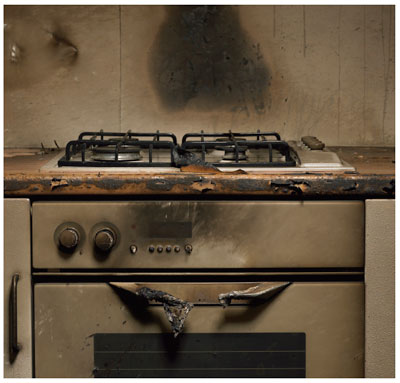
 Some equate product failure with product defect. The failed product that causes property damage or personal injury is called "defective." Some product liability lawsuits are premised on the mere fact of product failure without consideration of the operational life expectancy of the product. Courts, however, have recognized that products are not expected to last forever, and may fail due to ordinary wear and tear. In order to establish liability, a threshold hurdle is proof of premature failure. By definition, a product that fails after its design operational life expectancy cannot be considered a premature failure.
Life-Cycle Testing
When a manufacturer sets out to create a product, the design specification determines life expectancy. Drawings are created and a prototype product is constructed and tested. At some point, a production sample is made that enables the manufacturer to undergo life-cycle testing. Depending on the product—and the sophistication of the manufacturer—life-cycle testing may be performed. Such testing may actually be needed to obtain a listing or certification required for sale in certain jurisdictions.
Life-cycle testing is used as a proxy for years. For example, a product with a 10-year life expectancy is not going to be tested in the lab for 10 years prior to product introduction. Thus, life-cycle testing is used in an attempt to accelerate the conditions experienced in operating the product a certain number of times each day over the course of a year.
Weibull analysis is a statistical method used to predict the percentage of failure at various levels of cycles. For instance, a Weibull value of B-10 means at what point a 10 percent failure rate occurs. By way of example, a B-10 at 100,000 cycles, means that 10 percent of the products will fail at 100,000 cycles. Industry standards may impose a requirement of 150,000 cycles with no failures. So if testing reveals failures at 100,000 cycles, it's back to the drawing board for design and manufacturing enhancements.
Once the life-cycle testing is completed and the manufacturer is satisfied that the product can stand up to ordinary usage for a 10-year period, the product may be released for final production and sale. After the product is sold and leaves the control of the manufacturer, it ultimately is placed in service. If it is properly installed and periodically inspected and maintained, and is not subject to misuse or abuse, it may be expected to last for 10 years. When a product is in operation for that length of time, without failure, the courts are not likely to infer that the product was defective as of the time it left the manufacturer's control.
Making Use of Design Life
Upon being presented with a new claim involving property damage or personal injury arising out of a failed product, it is important to investigate the length of time the product was in service and then ascertain the product design life.
If the incident occurred after the product successfully functioned for its design life, then the product should not be assumed defective. If the claimant is not persuaded to drop the claim, then the life expectancy defense may be raised early in the case. It is not likely grounds to seek a dismissal as a matter of law based upon the allegations of the complaint, but is a basis for an early motion for summary judgment. The legal standard requires a showing that there is no genuine dispute over a material fact and the moving party is entitled to judgment as matter of law.
In some cases, the product may not be found after the incident, especially after a fire or explosion. Assuming no spoliation issues and that the defendant acted reasonably in preserving evidence within his control, the plaintiff may lack direct evidence of defect. There is no direct evidence because of a lack of product to test. In this circumstance, the plaintiff may chose to go forward on a theory of product malfunction as the evidence of defect.
Insufficient Evidence of Malfunction
If the factual context makes the plaintiff's claim as to the existence of a material issue of fact (i.e., defect) implausible, the plaintiff must come forward with additional evidence to support his claim. If the defendant moves for summary judgment based on the fact that the product was in use for many years without incident, plaintiff must come forward with evidence to rule out possible secondary causes or abnormal use that could account for the incident.
Thus, the burden is on the plaintiff to establish proper installation, maintenance, operation, and lack of misuse. This is because of case law recognizing that it is conjecture to assume malfunction as opposed to other potential causes, given proper functioning for years of usage and lack of proof of original defect.
In other situations, the product may be available for testing and inspection. Plaintiff may attempt to prove manufacturing defect by virtue of it being "out of spec." Perhaps it does not manifest the exact dimensions of the design drawings, notwithstanding having operated perfectly through the duration of its operational design life. Summary judgment is still a possibility.
Support for Summary Judgment
In the context of a typical products case, this would require an affidavit from a company employee who could inform the court, based on company design documents, that the product at issue had a specific design life. The deposition of the plaintiff or some other knowledgeable witness could be used to establish when the product was installed and how many years it was in service prior to failure. The motion could be further supported by a forensic engineer who, based upon inspection and testing of the product, is able to state an opinion that failure was due to the product wearing out.
In order for the plaintiff to defeat the motion, several approaches can be attempted. Plaintiff may deny the existence of the operational life expectancy or argue that the manufacturer failed to warn of the design life and risk of failure. For instance, there may be a distinction drawn between merely failing to perform properly as opposed to catastrophic failure with likely property damage and/or personal injury.
For this reason, the proactive manufacturer, mindful of the need to limit exposure and promote long-term and safe use of its products, will provide an appropriate warning to replace the product at expiration of the design life. If the product is accompanied by such a "product expiration" warning, it may be relied upon as additional grounds for summary judgment.
Warning Defense
Even if no express warning was given, the manufacturer may still prevail on the basis that the user should be deemed to know what can happen when a product stays in service too long.
The duty-to-warn doctrine does not require a warning of a product danger that is obvious or generally known. This argument may be less compelling with regard to certain failure modes of household products, as the consumer may not reasonably anticipate such consequences (e.g. a toilet that explodes after 10 years of use and floods a home). In contrast, a sophisticated user who purchases an industrial product is likely to be aware of the need to inspect, maintain, and replace equipment at certain intervals, and be aware of what could go wrong if such measures are not followed.
If the issue of warning does not come into play, then it is a relatively straightforward application of law to the facts. A court is not likely to find that 10 years of failure-free operation is grounds to infer defect as of the time the product left the manufacturer's control defect-free. This conclusion forecloses an essential element of a products liability cause of action. Summary judgment should therefore be granted.
Statutes of Repose
Aside from the specifics of the design life of a particular product, some jurisdictions offer blanket defenses to product failures after the passage of time. In the majority of states, the statute of repose does not apply to mass-produced products, and its application is limited to claims against construction or design professionals. However, about 20 jurisdictions have statutes that provide a defense to liability for allegedly defective products if the product was in use beyond a certain number of years. In effect, these statutes operate to determine useful life as a matter of law. Although typically set at 10 years, applicable periods range from 5 to 15 years, depending on the state.
Product statutes of repose may have different triggering dates. Nationally, there is no uniform start date. Depending on the state, the statute of repose for products could be triggered by a number of different starting points: date of initial purchase by end user; date of manufacture; date the product left manufacturer's possession and control; date sold by manufacturer; date first used; or date of delivery to original purchaser. Sometimes expert testimony is needed to establish the manufacture date of the final assembled end product based upon the date of manufacture of a component. Statutes may extend the period if the manufacturer has issued a written warranty with a longer useful life.
There are additional factors that should be considered in assessing whether the claim is barred by a statute-of-repose defense. Even if the state where a suit is filed lacks a product statute of repose, such a statute may yet be available. This is true in states with "borrowing statutes" that, depending on the facts, require application of the statute where the cause of action arose. Federal law should also be considered. Depending on the product (e.g. aircraft components), a federal statute of repose may apply. Finally, in a few states, some products may be considered an improvement to real property as opposed to personal property (e.g. a fire protection sprinkler head) and are covered by the general statute of repose. Such statutes typically run from the date of substantial completion of the improvement.
Finding Resolution
Claim professionals should never automatically equate "product failure" with "product defect." The law governing products liability regards "defect" as a term of art. To be defective, a product must fail prematurely. Therefore, any initial assessment of liability should include product life expectancy. Awareness and use of this concept can lead to the early favorable resolution of claims.

© Arc, All Rights Reserved. Request academic re-use from www.copyright.com. All other uses, submit a request to TMSalesOperations@arc-network.com. For more information visit Asset & Logo Licensing.