In “Chicago,” Roxie Hart becomes a celebrity after murdering her lover, yet no one notices her protective husband, Amos, who laments his lack of visibility in the classic show tune, “Mr. Cellophane.” Unfortunately, too many risk managers are suffering from the same identity crisis, as the only time anyone notices them is when something goes wrong.
 That revelation hit me while listening to a speech by Carol Fox, senior director of risk management at Convergys Corp., during the Risk and Insurance Management Society's annual conference.
In accepting the Harry and Dorothy Goodell Award for lifetime achievement–RIMS' highest honor–she noted that risk management triumphs are usually invisible to all but the keenest observers.
In reciting all the good risk managers do every day, Ms. Fox emphasized the workers who aren't injured, the properties that aren't damaged, the lawsuits that aren't filed and the hits to the balance sheet that never occur.
When was the last time a risk manager was called with congratulations for something that didn't happen? More likely, they only hear from the top dogs when disaster strikes, demanding to know why a loss wasn't prevented and warning that the company had better be insured!
It's no secret risk management can be a thankless job. Risk managers have improved their visibility in recent years, sometimes even rising to the coveted “C-suite.” But the majority must still call attention to everything they do as corporate guardians and document their bottom-line contributions.
They also have to make certain risk management is a core value across the company. Such commitment was clearly lacking at firms that claimed to cherish enterprise risk management but tossed the concept out the window to deal in reckless credit default swaps.
Axel Lehmann, chief risk officer of Zurich's global insurance operations, lamented during a press briefing that too many firms pay lip service to ERM.
“ERM is not something you can just come up with after setting your strategic growth plan. It has to be ingrained in the entire process,” he said. “Risk management is not something someone else does. It is a discipline everyone must practice.”
This isn't to say risk managers are innocent victims or free from blame when it comes to their lack of visibility and authority. A number of speakers urged risk managers to raise their profiles.
At a session on “Forging A Risk Management Career Path,” Bruce Zaccanti, a partner with Ernst & Young, said risk managers “must be able to motivate and lead a team of people and an organization. They have to be viewed as part of top management, not a midlevel service department.”
RIMS President Joe Restoule echoed that sentiment during his own speech. “Perhaps being viewed as a leader is not how you conceived of your career in risk management,” he conceded, while warning that risk managers are being called upon to go beyond technical analysis, insurance purchasing and claims monitoring to become true leaders in their organizations.
Joe knows what he's talking about, not only because of his cool title–”Leader, Risk Management”–at NOVA Chemicals Corp., but because he's been able to rise through the ranks to lead his profession as RIMS president while keeping up with his demanding day job as a full-time risk manager. “Do you have the courage to lead?” he concluded, throwing down the gauntlet at the feet of his colleagues.
What's your response? Would you rather be “Mr. Cellophane,” or “Leader, Risk Management”? It's up to you.
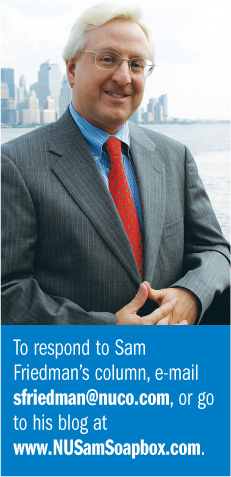
Sam Friedman is NU's Editor In Chief. To contact him, e-mail sfriedman@nuco.com or go to his blog at www.NUSamSoapbox.com.
© Arc, All Rights Reserved. Request academic re-use from www.copyright.com. All other uses, submit a request to TMSalesOperations@arc-network.com. For more information visit Asset & Logo Licensing.